
Letna Park’s elevated position offers spectacular views of the Vltava River, its winding bridges, and the city’s picturesque rooftops. One of the most popular viewpoints is near the giant Metronome clock (1991; 25 m). This time machine symbolises the passage of time and the changes the country has undergone since the Communist era. At the foot of the monument you will see the pedestal and torches of the former Stalin Monument (approximately 50 metres with the pedestal; 1955-1962), whose foundations were dug up by political prisoners. The Metronome is a popular gathering spot for the local community, skateboarders, and tourists, perfect for watching sunsets, and an occasional cultural venue.
Before the city decided to make the area into a park (19th c.), it had served a variety of purposes. Its history dates back to the Middle Ages, when its part was used for vineyards or for celebrations such as coronation feasts. Later, the vast open space was a venue for military exercises, parades, and gatherings of military units (particularly during the 18th and 19th centuries).
In addition, the flat hill of Letná has been the scene of some significant moments in Czech history. It was here that many mass demonstrations took place, not only during the Velvet Revolution in 1989. Cultural events have also taken place here, including gigantic concerts, festivals and performances. During the winter months a temporary ice rink is available for use.
Letna Park (Letenské sady) occupies only part of the Letná district, between the buildings in the neighbourhood of Holešovice and Kramář Villa (1914), the seat of Czech prime ministers. The property was originally built as a private residence for Karel Kramář, later Czechoslovakia’s first prime minister. It is a grand neo-Baroque villa with Art-Nouveau elements, but it also features unique Russian and Byzantine decoration in the interiors, as instructed by Kramař’s Russian wife. The facility is open some Saturdays and during special events.
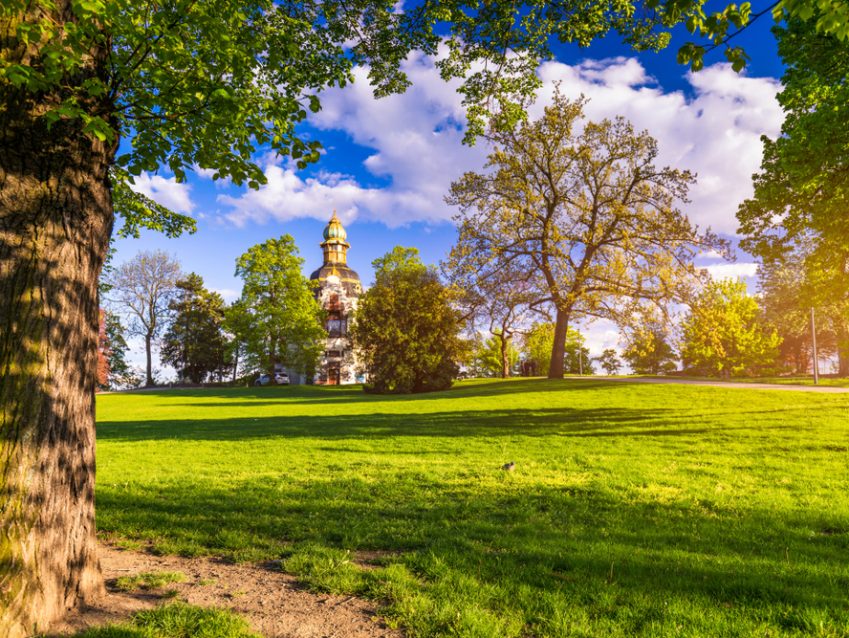
Letna Park also contains several other interesting buildings that visitors will notice while walking there. Another ornate Neo-Baroque villa not far from Kramář Villa is known as the Hanava Pavilion. Believe it or not, the whole building was moved here from Prague’s Exhibition Grounds after the Jubilee Exhibition (1891). The relocation was prompted by the generous donation from Prince Hanavsky to the city. As the owner of major ironworks, he could certainly afford it. Now it serves as a restaurant with views. Its cast-iron structure hidden underneath the facade was another marvel of technological and industrial progress in those times, like the renowned Petřín Tower (mini-Eiffel Tower) you will see from the park.
Surprisingly, another building was relocated to Letna Park much later, the Expo ’58 Pavilion on the edge of Letna Park. It is an award-winning modern villa that represented the country at the Brussels World Fair in 1958. It is considered a masterpiece of modernist architecture and a prime example of the so-called Brussels style. Its distinctive features include an atypical round shape, a sleek glass facade, and elegant lines that highlight the lightness of its construction. The buiding currently houses an art sales gallery and an auction hall.
Another restaurant you will notice in the park, larger than the Havana Pavilon, is inside Letensky zamecek (Letna Chateau). This villa was not built for a noble family, but rather as a restaurant for the city’s elite. They used to stroll in the park and wanted a grand venue in which to enjoy gourmet cuisine. Inspired by Italian villas, it was built in the Neo-Renaissance style in the 19th century.
Letna Beer Garden (usually open in the warmer season) and wooden picnic tables at Letna are a local favourite, nestled among towering chestnut trees. This is the perfect spot for people-watching, or having a pint, or a picnic with friends or family while taking in the city views.
Letna Park is easily accessible by public transport. To avoid climbing all the steps from the riverbank, you can walk from Prague Castle, or take a tram to the Letenské náměstí stop or Hradčanská Metro station and walk towards the park. The park is also a great place to visit on your way to the nearby National Technical Museum or the Museum of Agriculture.